
Beyond the Screen: Flutter vs React Native in the Race for Smart Connectivity
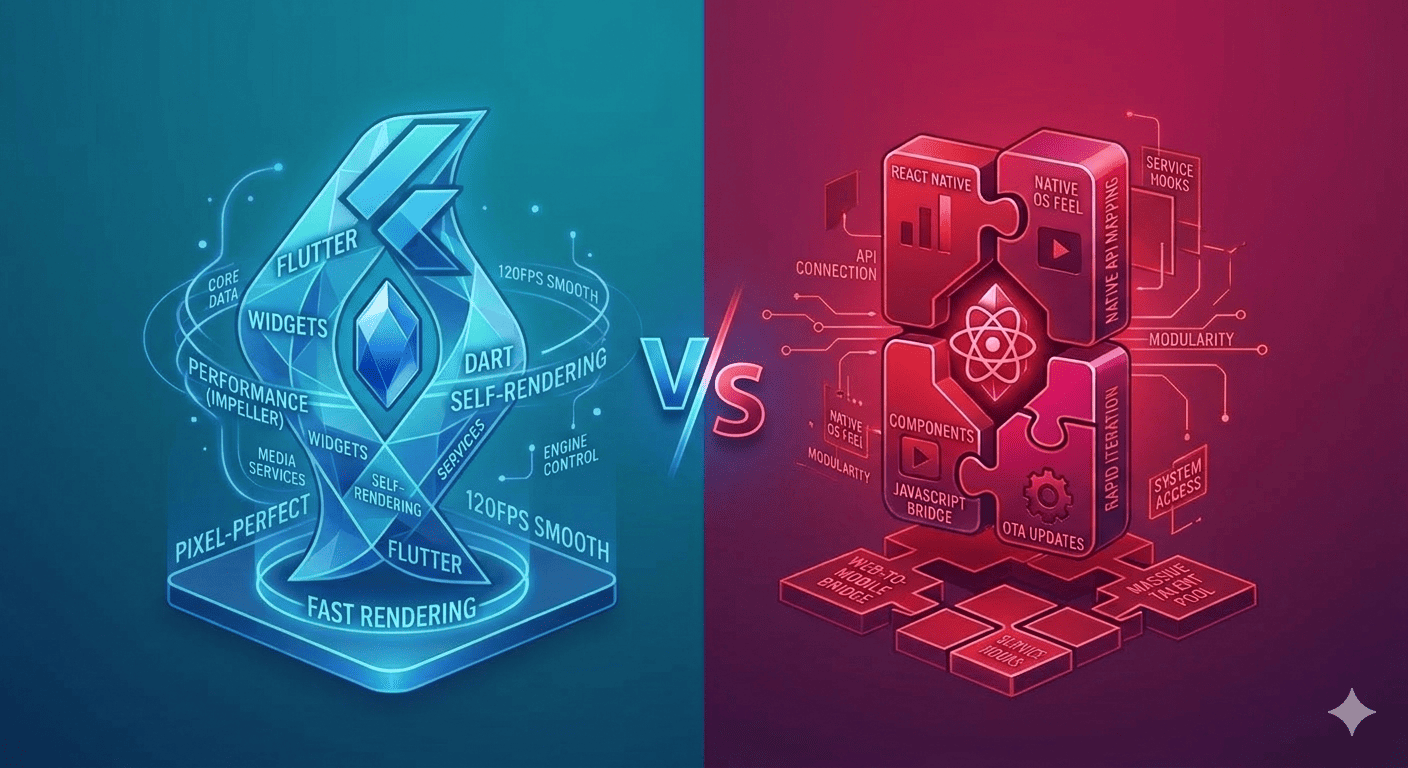
Beyond the Screen: Flutter vs React Native in the Race for Smart Connectivity
Beyond the Screen: Flutter vs React Native in the Race for Smart Connectivity is a crucial topic as modern applications move beyond smartphones into a connected ecosystem of devices. Today, apps are not just about screens—they interact with IoT devices, wearables, and smart systems.
Smart connectivity refers to how devices like smartwatches, IoT sensors, and connected home systems communicate seamlessly. According to IBM IoT insights, connected devices are rapidly transforming industries.
Mobile apps play a central role in this ecosystem. They act as control hubs for smart devices, enabling real-time communication, monitoring, and automation.
Flutter and React Native are two of the most popular cross-platform frameworks used to build such applications. Both allow developers to create apps for multiple platforms using a single codebase.
While Flutter is backed by Google and focuses on performance and UI consistency, React Native—developed by Meta—emphasizes flexibility and native integration.
Choosing between these frameworks becomes critical when building apps for smart connectivity, where performance, hardware access, and scalability matter.
Overview of Flutter & React Native
Flutter uses the Dart programming language and provides a rich set of pre-built widgets. It compiles directly into native code, offering high performance and smooth UI rendering.
One of Flutter’s strengths is its ability to deliver consistent design across platforms. Developers have full control over UI elements without depending heavily on platform-specific components.
React Native, on the other hand, uses JavaScript and relies on native components. This makes it easier to integrate with existing native apps and leverage platform-specific features.
React Native benefits from a large developer community and a wide ecosystem of third-party libraries, making development faster in many cases.
In terms of architecture, Flutter provides a more controlled environment, while React Native offers flexibility through native modules.
Flutter vs React Native – Key Differences for Smart Connectivity
- Flutter offers better UI performance with direct rendering
- React Native provides stronger native integration
- Flutter uses Dart, while React Native uses JavaScript
- React Native has a larger ecosystem of libraries
- Flutter ensures consistent UI across platforms
- React Native is easier for web developers to adopt
Security in the "Smart" Era
Security is critical in smart connectivity environments where apps interact with multiple devices and data streams.
Flutter provides strong security through compiled code and reduced reliance on third-party bridges, which minimizes vulnerabilities.

React Native depends more on native modules and external libraries, which can introduce security risks if not properly managed.
Following best practices from OWASP Mobile Security helps developers secure applications across both frameworks.
In IoT and connected environments, securing communication channels between devices is essential to prevent unauthorized access.
Performance in Real-Time Apps
Flutter performs well in real-time applications due to its direct compilation into native code. This reduces lag and improves responsiveness.
React Native may experience slight delays due to the JavaScript bridge, especially in high-performance scenarios.
Hardware Handshakes: Bluetooth & NFC
Both frameworks support hardware integration, but React Native has more mature libraries for Bluetooth and NFC.
Flutter is improving rapidly, with plugins that enable device connectivity and IoT communication.
Beyond the Phone: Wearables & Embedded Systems
Flutter is expanding into embedded systems and supports devices beyond smartphones.
React Native is still more focused on mobile platforms but can integrate with wearable technologies through native modules.
Background Processing & Battery Optimization
Efficient background processing is essential for connected apps. Flutter provides better control over performance and battery usage.
React Native relies on native APIs, which may require additional optimization for battery efficiency.
The Architecture of Connectivity (Framework Performance)
Flutter’s architecture ensures consistent performance across platforms, making it suitable for complex connected systems.
React Native’s flexibility allows integration with existing systems but may require optimization for scalability.
Developer Experience
Flutter offers a structured development experience with built-in tools and widgets.
React Native provides flexibility and faster onboarding for developers familiar with JavaScript.
Developer Velocity vs Native Performance
React Native allows faster development due to reusable components and a large ecosystem.
Flutter provides better performance but may require more initial learning effort.
Final Verdict
Both Flutter and React Native are powerful frameworks for building modern applications.
If performance, UI consistency, and control are your priorities, Flutter is a strong choice.
If flexibility, faster development, and native integration are more important, React Native is a better option.
For smart connectivity applications, the choice depends on project requirements, scalability needs, and developer expertise.
FAQ Section
Both are excellent frameworks. Flutter is better for performance, while React Native is better for flexibility.
Yes, Flutter is suitable for IoT apps due to its performance and growing support for device integration.
Yes, but performance may vary depending on the complexity of the application.
Flutter generally offers better performance due to native compilation.
Other Post

How Custom Software Can Save Costs & Boost Productivity in…

App Support & Maintenance 101: Why It’s Critical for Every…